- PRODUCT CATEGORY


Rex has supplied industrial wheels and rollers across New Zealand since 1946, from small nylon and rubber wheels for trolleys and trailers through to cast iron and urethane wheels rated to 2000kg for heavy machinery and towing. The range covers nylon, cast iron, solid rubber, polyurethane and aluminium-hub wheels, plus pneumatic wheels and tyres, conveyor and drive rollers, jockey and trailer wheels, and puncture-proof options for rough sites.
Not sure which wheel suits your load, floor or fitting? The guidance below covers materials, capacities and bearings, or browse the full range and subcategories.
The wheel material sets how easily it rolls, how much load it carries and how it treats your floor. Nylon wheels are hard-wearing and roll easily under heavy loads on smooth concrete, with the Rex range rated up to 695kg, though they can be noisy and mark softer floors. Solid rubber wheels are quieter and gentler on floors but roll harder under load, and suit general trolley and platform work up to 375kg. Polyurethane and cast iron urethane wheels combine an easy roll with high capacity and resist marking, running up to 2000kg in the heaviest cast iron urethane models. Cast iron wheels handle the highest loads and high heat, rated up to 1800kg, where floor protection matters less than capacity. Pneumatic air-filled wheels and tyres cushion the load over gravel, grass and rough yards, while puncture-proof and zero-pressure wheels give the same soft ride without the risk of a flat. Aluminium-hub wheels save weight while still carrying up to 700kg.
Industrial and trolley wheels
Pneumatic wheels, tyres and tubes
Trailer, jockey and pallet truck wheels
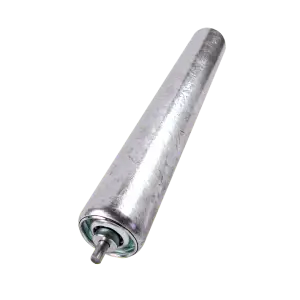
Rollers
Four things decide the right wheel: load, floor, fitting and environment. Work out the total load the unit carries and divide it across the load-bearing wheels, then leave a margin, so a four-wheel trolley at 400kg wants wheels rated to at least 150kg each rather than 100kg. A larger diameter wheel rolls more easily over thresholds, cracks and rough floors and needs less push force, while a smaller wheel keeps a low deck height and tighter turning. Check the bore and bearing too: roller and ball bearings roll easier under load than a plain bore, and the axle or bore diameter has to match your fork, stub axle or fitting. For outdoor and uneven ground, choose pneumatic, puncture-proof or zero-pressure wheels; for smooth indoor concrete, nylon or polyurethane roll easiest.
If you’re replacing a worn wheel and aren’t sure what’s fitted, send us a photo along with the wheel diameter, bore size and axle or fork dimensions through our contact page, or call your nearest Rex store. We’ll match you to the right wheel or roller, or point you at bulk and trade pricing if you’re ordering in quantity.
Nylon rolls easily and carries heavy loads on smooth concrete but can be noisy and mark softer floors. Rubber is quiet and gentle on floors but rolls harder under load. Polyurethane rolls easily, carries heavy loads and resists marking. Cast iron suits the highest loads and high heat where wheel wear from load or temperature is the main concern.
Add up the total load the unit will carry, divide it across the load-bearing wheels, then leave a safety margin and match that per-wheel figure against the range’s rated capacity. If you’re unsure, call us and we’ll help you match the right wheel to the job.
A larger diameter wheel rolls more easily over thresholds, cracks and rough floors and needs less push force, so it suits rough or outdoor use and heavier loads. A smaller wheel keeps a lower deck height and turns in tighter spaces, which suits light indoor gear. Match the diameter to your floor and how far the load travels.
Pneumatic wheels are air-filled, so they cushion the ride over gravel, grass and rough ground but can go flat. Puncture-proof and zero-pressure wheels use a solid or foam-filled fill that gives a similar soft ride with no risk of a flat, which suits sites where a puncture would take a machine out of service.
Yes. Roller and ball bearings roll easier under load and last longer than a plain bore, which matters most on heavier or frequently moved units. Check the bore or axle diameter matches your fitting, whether that’s a fork, stub axle or castor housing.
Yes. Rex stocks pallet truck load and steer wheels and rollers, trailer wheels on steel rims, and jockey wheels. Send us the diameter, bore and axle size, or a photo of the worn wheel, and we’ll match it.
We can offer bulk and trade pricing on select ranges and products, depending on the item and the quantity. Tell us what you need and how many through our contact page, and we’ll let you know how we can help with your specific requirements.
Looking for a complete castor rather than a bare wheel? See the full castors range for swivel, fixed and braked units. For moving loads, browse hand trucks and trolleys, or use the wheel types above to find the exact material and capacity you need.